
Hilton Hotels & Resorts — UX Case Study
Role in the Project
I worked on this as a UX Designer — responsible for the end-to-end research, wireframing, and usability testing. This was an early-career project that taught me how to listen to users before jumping to solutions.
Role: UX Designer · Duration: Feb 2020 – March 2021 · Type: Redesign
Purpose of Project
Hilton Hotels & Resorts is a global brand of full-service hotels and resorts and the flagship brand of American multinational hospitality company Hilton. This project is an effort to address the problem of declining travel bookings in Hilton Hotels website. Hilton’s stakeholders wanted travellers to be able to co-operatively plan, book and travel, making it easier for teams to stay together for work or pleasure trips.
What I set out to answer:
Why are users dropping off before completing a booking?
What do people actually need when choosing a hotel — and is Hilton giving them that?
How does Hilton compare to what users are already comfortable with elsewhere?
LWhat would make someone choose Hilton over a competitor?
Target Audience
Two types of people kept coming up in my research — the business traveller booking quickly on a deadline and the leisure traveller taking their time, comparing options and looking for reassurance. Both had very different needs, but both were being served the same experience.
Design Strategy
I followed a Design Thinking approach — not because it was a checklist, but because I genuinely didn’t know what the real problem was until I spent time with users. The research phase surprised me more than once.
1. User Research
Heuristic Evaluation
Benchmarking/Competitive Analysis
Interview/Contextual inquiry
2. Define & Ideation
Empathy Map
Affinity Mapping
3. Prototyping
Wireframing
4. User Testing
Key Challenges and Constraints
The hardest part wasn’t the design — it was getting people to talk openly. Recruiting participants who’d actually show me how they used the site, rather than just tell me what they thought I wanted to hear, took real effort. I had to make the sessions feel like conversations, not tests.
User Research
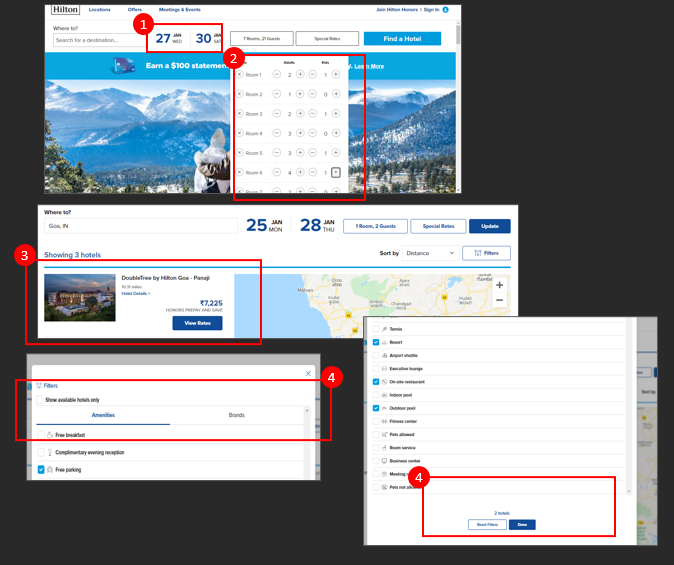
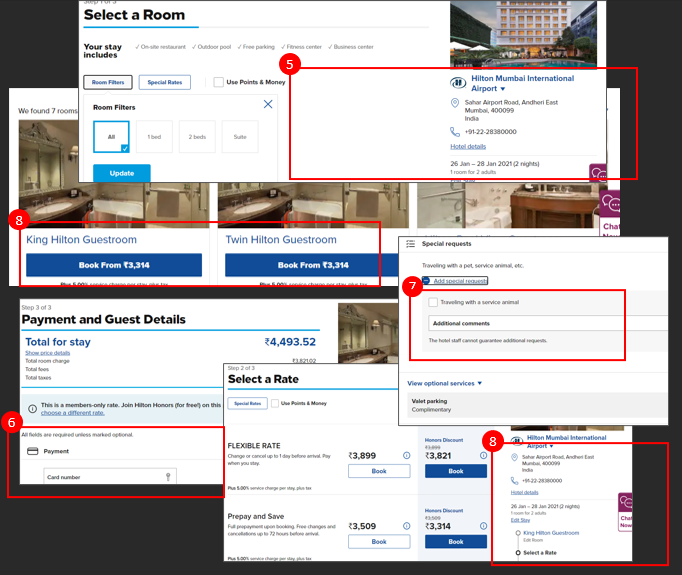
Before talking to a single user, I walked through the Hilton website myself — methodically, with fresh eyes. I was looking for friction: where does the experience stall? Where does it ask too much? Where does it lose trust?
I used a heuristic evaluation to document what I found. Here’s what stood out:
What the heuristic evaluation flagged:
Date selection component could be re-designed.
Consistency in styling of the buttons in terms of color, size should be maintained throughout the website.
Hero banner on the landing page could be made more attractive and eye-catching by using the images from the hotel industry
Booking journey could be simplified with addition of social element (Reviews, ratings, Popularity) to gain the trust of our customers (new and old).
Visual clutter from the Home page to be removed to make it look simpler and easier to understand the information.
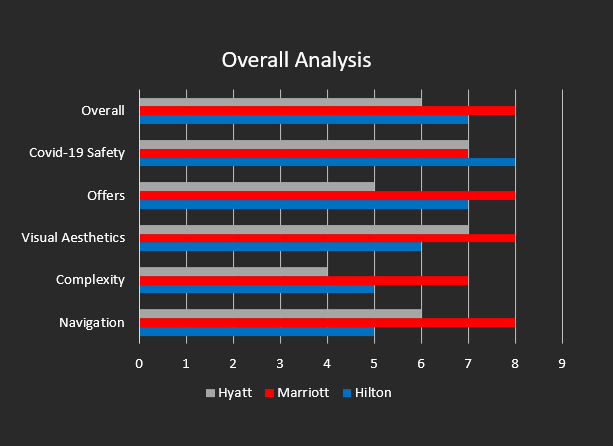
Next I benchmarked Hilton against Marriott and Hyatt , not to copy them, but to understand what users were already used to. I looked at four areas: the booking flow, offers and deals, meetings & events, and overall performance.
What stood out immediately: Marriott had a stronger visual design and better accessibility. Hilton had the edge on offers and safety messaging. Hyatt sat somewhere in the middle. Users coming from any of these sites to Hilton had higher expectations than the site was meeting.
Competitor’s websites are as follows
1. Marriott Hotels ( https://www.marriott.com/default.mi )
2. Hyatt Hotels ( https://www.hyatt.com/ )
Insights
The comparison confirmed what I suspected. Hilton wasn’t broken, it just wasn’t earning trust the way its competitors were. Marriott showed more hotel photos, made pricing clearer and felt more consistent. Users on Hilton had to work harder to feel confident about their booking.
The opportunity was clear: Hilton had strong brand equity and great offers. The design just wasn’t showing that off.
Interview or Contextual Inquiry
I ran 4–5 contextual video interviews, asking people to actually use the Hilton website while I watched. Not “what do you think of this?” but “show me how you’d book a room for next weekend.” Watching someone struggle with the date picker in real time tells you more than any survey ever could.
The sessions were semi-structured, I had a guide, but I followed the conversation wherever it went. By the end, I had a clear picture of what users were feeling, thinking, doing and struggling with.
How I ran the sessions:
I kept the sessions loose on purpose. I had a guide with key questions, but the goal was to make it feel like a conversation — not a test. I took my own notes even when recording, because what someone’s face does when they can’t find the date picker is just as important as what they say. Every session ended with me asking what one thing they’d fix if they could.
Questions I asked
1. Describe the last time you struggled with booking a hotel, what was that like?
How did you solve the problem?
2. How would you describe your past and current experience with Hilton website?
What was your primary & secondary goals when visiting this website?
3. What do you like or dislike about using Hilton website and why so?
Is there anything you often look for on website that is missing or hard to find?
What was the feeling you had when you couldn’t find what you’re searching for?
4. Can share your screen and walk me through the normal booking procedures you follow while booking a hotel in Hilton website?
Tell me more about the budget expectations and factors you consider while picking any hotel.
What would you think about the Hilton offers? Tell me more about that.
In the scale of 10, how do you rate the interaction throughout the website and why?
5. What improvements could be made to make this website easier or better?
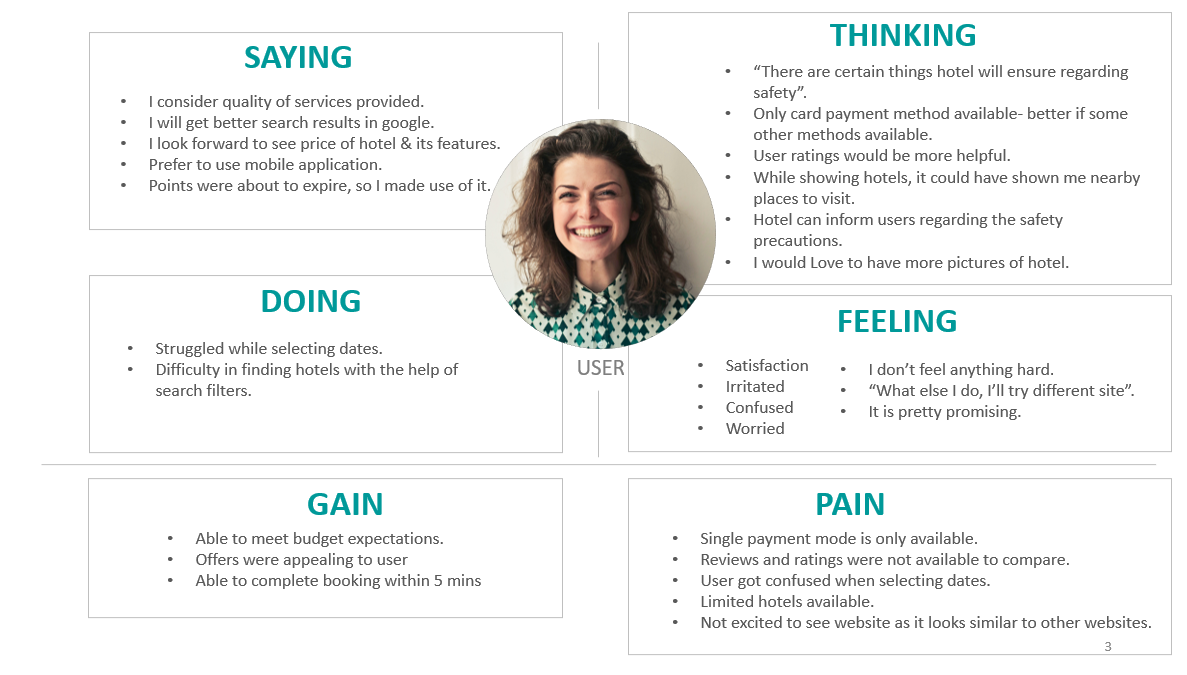
Empathy Map
After the interviews, I mapped out what users were saying, thinking, doing, and feeling. A few things hit harder than I expected — particularly how quickly people gave up and switched to a competitor site when they hit confusion. “I’ll just try a different site” was said more than once.
Affinity Mapping
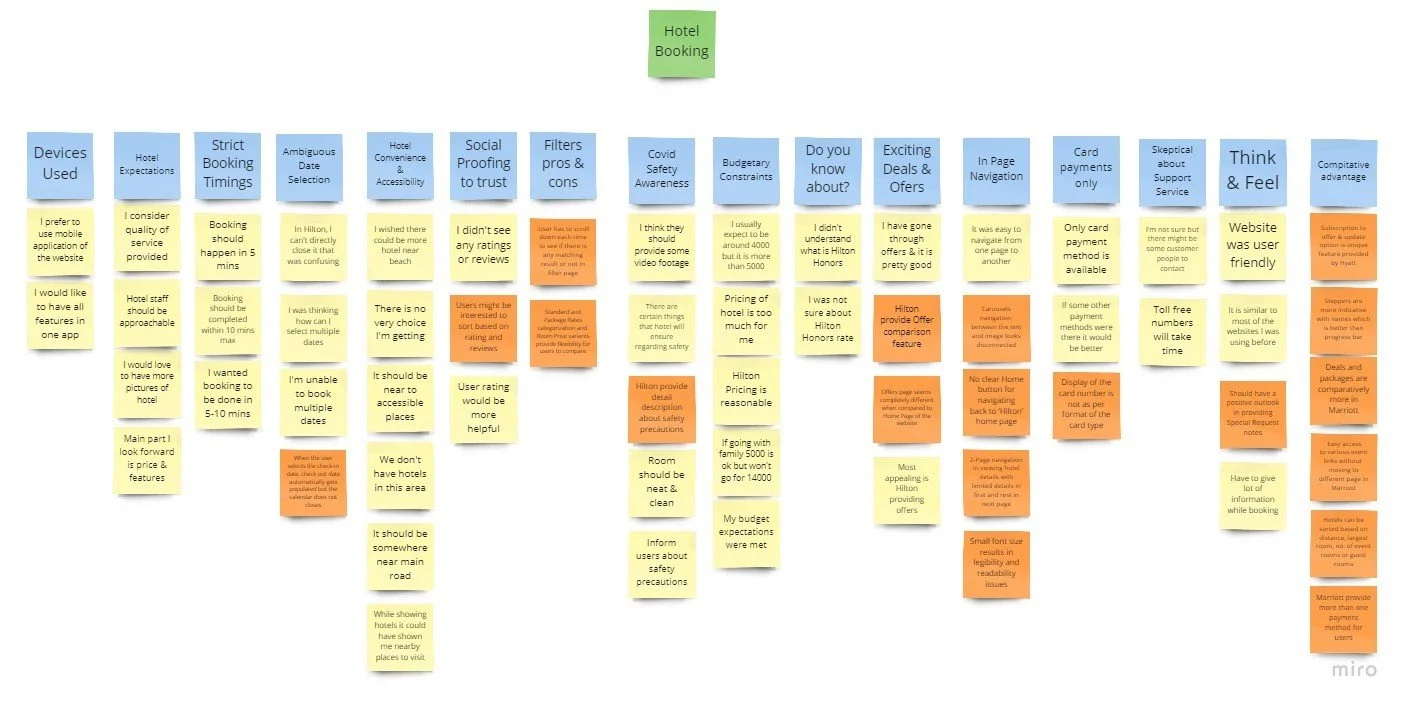
I pulled every observation and quote from the interviews onto a Miro board and started grouping them. Patterns emerged quickly — date confusion, missing reviews, payment anxiety and a general feeling that the site looked the same as every other hotel site. That last one was the one that stuck with me most.
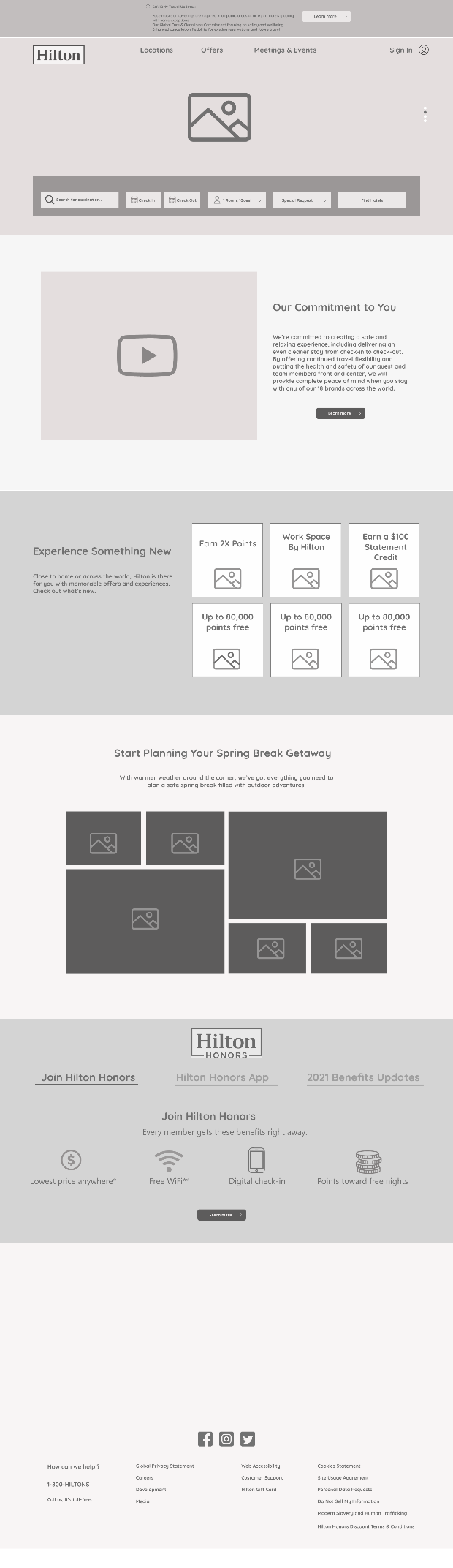
Wireframes
Feature Highlights
Every wireframe decision came directly from something a user said. Here’s what changed and why:
Split the check-in and check-out date pickers — users kept selecting the wrong dates when they shared a single calendar component.
Added a “Near Visit” feature — multiple users mentioned wanting to know what’s around the hotel before booking.Ratings and reviews are added along with hotel amenities, to help users to faster the process of selection of rooms or hotels.
Ratings and reviews added alongside amenities — the single most-requested feature from interviews. Users didn’t trust the site without them.
Added more hotel and room photos — users were actively looking for these and leaving when they weren’t there.
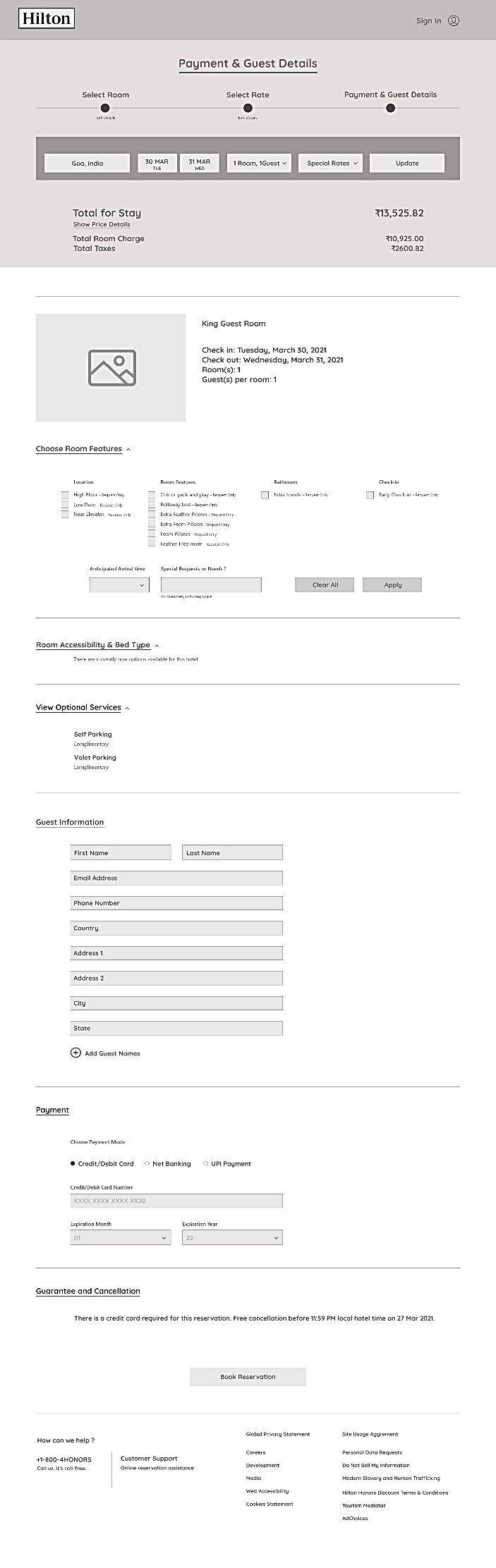
Expanded payment options to include UPI and net banking — card-only checkout was a hard stop for several users.
Results of User Testing
I tested the prototype with the same types of users I’d interviewed earlier — giving them one task: book a King Guest room in Goa. I watched. I didn’t help. I just noted where they sailed through and where they paused.
The process: define the tasks → recruit participants → run the sessions without interfering → spot the patterns in what went wrong (and right).
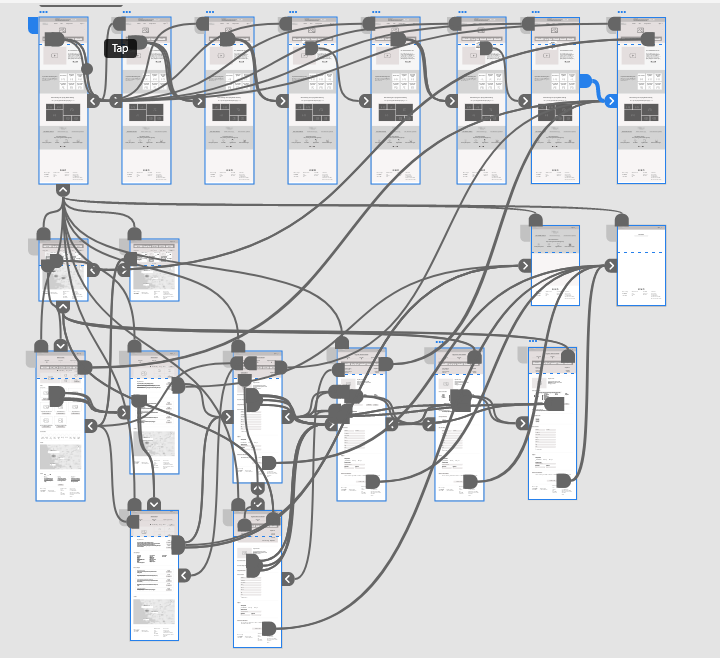
Task 1 : Book a King Guest room in Goa.
User Findings
I tested with 4–5 users. All of them completed the booking task — which hadn’t been the case with the original site. A few things stood out:
Users were able to select dates easily without confusion.
Users were more interested in exploring the website.
Users were able to see multiple payment options.
Users were interested in seeing reviews, ratings and photos.
Almost all the users were able to get information about nearby places to visit.
Conclusion
The redesign worked — users could complete the task, they trusted the experience more and they actually wanted to explore the site rather than abandon it. But more than the outcome, this project taught me something I carry into every project now: the real design problem is almost never the one you start with. I came in thinking Hilton had a visual design problem. What users showed me was a trust problem. The visuals were just where it showed up.
If I were doing this project today, I’d spend even more time in the research phase — specifically on the moments where users hesitated. That hesitation is where the real insight lives.